


You wake up already queasy. The thought of brushing your teeth feels like too much, the smell of breakfast turns your stomach, and even water may seem hard to handle at the wrong moment. That's a common pregnancy experience, but common doesn't mean easy.
Many parents want a gentle option before moving to stronger interventions. Acupressure for morning sickness fits that need well. It's simple, low-cost, and easy to use at home. It also works best when it's part of a bigger plan that includes food timing, hydration, movement, rest, and emotional support.
Pregnancy nausea can affect far more than your stomach. It can interrupt sleep, lower your appetite, make exercise harder, and wear down your mood. That's why the most helpful approach isn't a single trick. It's a set of supportive habits that reduce the load on your body and mind.
Navigating Morning Sickness A Holistic Starting Point
Morning sickness often feels most frustrating because it can dominate the small parts of the day. Getting out of bed, packing lunch, driving to work, helping older children, or answering a simple text can all feel harder when nausea is humming in the background.
Acupressure has a long history in traditional Chinese medicine, and its modern use became more visible as P-6 wristbands and hospital protocols were studied. The point used most often for pregnancy nausea is very specific. It sits between the two large tendons on the inner wrist, about three finger-widths below the wrist crease, which helped make it a reproducible, low-cost option to test in pregnancy settings through MedlinePlus guidance on morning sickness and acupressure.
What makes this especially useful in practice is that it doesn't ask much of you. You don't need a complicated setup. You can learn it once, use it anywhere, and pair it with other supports on the same day.
Practical rule: Use acupressure as one tool, not your whole plan. The best results usually come when you combine it with small meals, hydration, gentle movement, and enough recovery time.
A holistic approach also means paying attention to your nervous system. Nausea often worsens when you're overtired, stressed, dehydrated, or going too long without food. If you're interested in broader traditional approaches to calming the body, this overview of Chinese herbs for anxiety support offers a useful mind-body perspective, though any herb or supplement during pregnancy should be reviewed with your prenatal clinician first.
Hands-on therapies can also fit into this wider care model. Some families already see the value of body-based support through services like convenient mobile RMT for seniors, because comfort care often works best when it's accessible, gentle, and easy to continue consistently.
Your Step-by-Step Guide to P6 Acupressure
The key to effective acupressure for morning sickness is accuracy. Many people press vaguely around the wrist and assume the method doesn't work. Usually, the issue is placement or pressure.
Here is a visual guide before you try it:
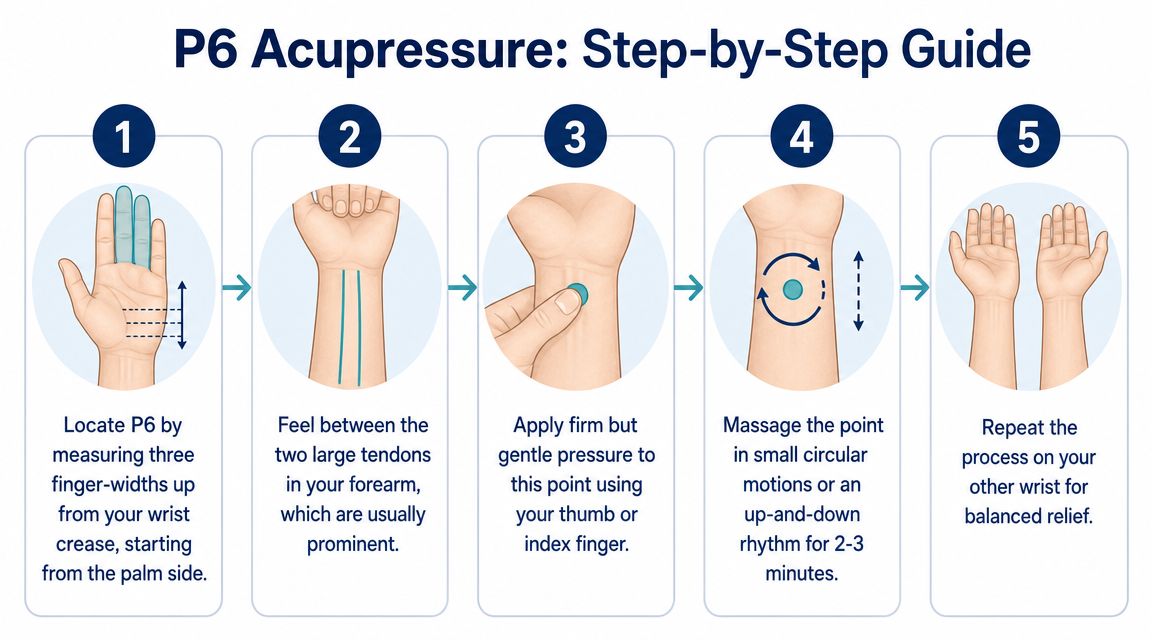
Find the exact point
Turn one palm upward. Place the first three fingers of your other hand across the inside of your wrist, starting at the wrist crease. Just below that three-finger measure, look between the two prominent tendons running along the inner forearm. That spot is P6, also called Neiguan.
If you flex your hand slightly, the tendons are easier to feel. The point is not off to the side and not in the center of the whole wrist. It sits right between those two tendon lines.
Use finger pressure the right way
Once you've found P6, press with your thumb or index finger using firm, circular pressure. The goal is pressure that feels noticeable and slightly achy, but not sharp or painful.
The NHS guidance for P6 acupressure advises locating the point three finger-widths below the wrist crease between the tendons, then applying pressure for 2 to 3 minutes on each wrist, repeating as needed. That same NHS summary notes a review of 40 trials involving 4,858 patients in which P6 acupressure was summarized as as effective as anti-sickness medication for postoperative nausea and vomiting, while also noting it doesn't work for every patient and relief may begin within 10 to 30 seconds or take up to 5 minutes in some cases, as described in this NHS guide to using pressure points for nausea.
A simple routine works well:
- Sit down comfortably and rest your forearm.
- Locate P6 carefully using the wrist crease and tendon landmarks.
- Press firmly with your thumb or finger.
- Move in small circles for 2 to 3 minutes.
- Repeat on the other wrist.
Press firmly enough to feel the point, not so hard that you create pain. If you tense your shoulder, jaw, or hand while doing it, you're probably pressing too aggressively.
Use wristbands if you want steady pressure
Some pregnant patients prefer P6 wristbands because they maintain pressure without needing repeated hand work. These are the same style of over-the-counter nausea bands sold in many pharmacies and stores.
When you use a band, the plastic stud must sit directly over the P6 point. That matters more than how tight the fabric feels. If the band rides too high, too low, or off to the side, it may do very little.
A few common mistakes can make wristbands less helpful:
- Wearing them too loosely so the stud drifts off the point
- Placing them by guesswork instead of checking the tendons
- Using only one wrist when you feel better with balanced stimulation
- Taking them off too quickly before giving them time to work
This short demonstration can help you visualize the process in motion:
When this works best
P6 often works better when you use it early. If you already know your nausea tends to spike on waking, in the car, or when your stomach is empty, apply acupressure before that usual trigger if possible.
It's also worth being honest about trade-offs. Acupressure is appealing because it's non-drug and self-directed. It's not a guaranteed fix, and it won't replace medical care for severe vomiting. But for many people, it can take the edge off enough to make eating, hydrating, and functioning easier.
Nourishing Your Body to Combat Nausea
Acupressure can help calm the symptom. Food habits often determine whether the symptom keeps returning. In early pregnancy, an empty stomach, blood sugar swings, strong smells, heavy meals, and dehydration can all push nausea higher.
That's why the most practical nutrition plan is usually the least glamorous one. Eat earlier than you think you need to, eat smaller amounts more often, and stop trying to make every meal look ideal.
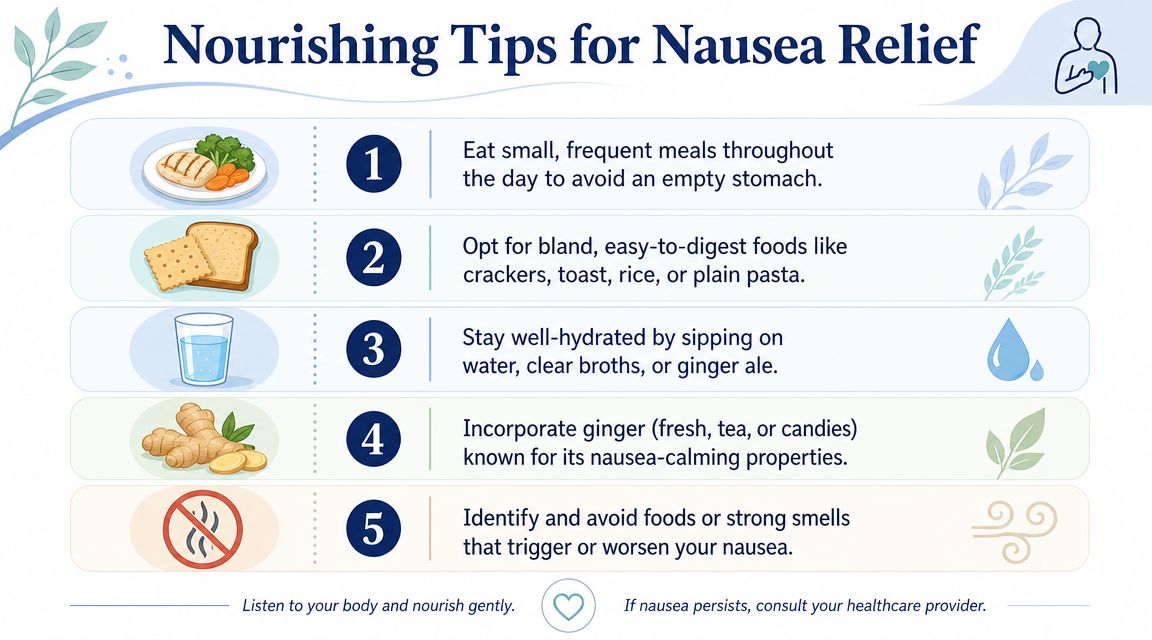
Build meals around tolerance first
When nausea is active, “healthy” has to include “tolerable.” Dry toast, plain crackers, rice, oatmeal, applesauce, plain yogurt, broth, simple noodles, potatoes, and fruit may be more realistic than large mixed meals.
Try these habits:
- Keep a bedside snack so you're not standing up on an empty stomach.
- Use small protein additions such as yogurt, nut butter, eggs, tofu, cottage cheese, or beans if those sit well for you.
- Eat every few hours instead of waiting until you feel very hungry.
- Separate food and fluids when needed if drinking with meals makes you more nauseated.
- Choose cooler foods if hot food smells trigger you.
If eating makes you feel worse rather than better, it can help to learn the difference between nausea from pregnancy, fullness, reflux, or digestive irritation. This practical article on understanding post-eating discomfort can help you think through those patterns.
Supportive foods and common triggers
Ginger is a common choice in an integrative plan. Some people do well with ginger tea, grated fresh ginger in warm water, ginger candies, or ginger added to soups. Others prefer peppermint tea or plain sparkling water if still water feels unappealing.
A simple comparison can make meal choices easier:
| Better tolerated for many people | Common nausea triggers |
|---|---|
| Crackers, toast, rice, plain pasta | Greasy foods |
| Applesauce, bananas, oatmeal | Very spicy meals |
| Broth, simple soups, bland potatoes | Large sugary foods |
| Yogurt, eggs, nut butter if tolerated | Heavy fried takeout |
| Cool fruit, smoothies if tolerated | Strong food odors |
Nutritional gaps to watch thoughtfully
Pregnancy can make nutrition harder at the exact time your body needs steadiness. If nausea limits your diet, some parents worry about whether they're missing key nutrients. That's a reasonable concern.
Rather than self-diagnosing a deficiency, focus on patterns that are worth discussing with your clinician: very limited food variety, aversion to nearly all protein foods, difficulty taking a prenatal vitamin, or ongoing vomiting that makes intake unreliable. Vitamin B6 often comes up in pregnancy nausea discussions, and omega-3 supplements also matter in many integrative conversations because they support overall nutritional quality and may support mood as part of a broader plan.
When choosing supplements, keep the process simple:
- Pick one prenatal product you can actually tolerate. A gummy, capsule, powder, or evening dose may be easier than forcing a large tablet.
- Look for clear labeling. Third-party testing and simple ingredient lists are helpful.
- Consider omega-3s carefully. Many people look for a fish oil or algae-based option that provides EPA and DHA, but the right fit depends on tolerance, budget, and clinician guidance.
- Avoid chasing trends. Expensive doesn't always mean better.
- Ask before combining products. Layering a prenatal, separate iron, omega-3, ginger, and herbal blends can get confusing fast.
Affordable choices are usually the ones you'll use consistently. Store-brand prenatals, plain foods bought in bulk, frozen fruit, oats, eggs, rice, beans, and simple soups often work better than a complicated “wellness” shopping list.
A nausea-friendly diet is not a perfect diet. It's a practical one that gives your body enough stability to function.
If you enjoy learning how food patterns affect attention, energy, and mood across the family, this guide on diet approaches for ADHD support is a useful example of how nutrition can shape day-to-day function in a broader brain-health context.
Habits that usually make nausea worse
Certain routines work against recovery. These are common ones:
- Skipping breakfast and trying to “push through”
- Overeating once you finally feel hungry
- Relying on highly greasy convenience food
- Drinking very little all day
- Ignoring smell triggers in your environment
- Taking supplements on an empty stomach when they upset you
Food doesn't need to be perfect. It needs to be steady, doable, and kind to your nervous system.
Brain-Healthy Habits for a Calmer Pregnancy
Nausea isn't only physical. When it drags on, it can narrow your world. You may cancel plans, stop moving your body, sleep poorly, and start bracing for the next wave of symptoms. That mental load matters.
A calmer pregnancy often depends on multi-modal care. Broader nausea guidance notes that acupressure is not always a one-point universal remedy and may be paired with other points, diet changes, ginger, or other strategies, reflecting a growing emphasis on self-managed, combined support in resources like this overview of pressure points for nausea.

Gentle exercise helps more than many people expect
If you're exhausted and nauseated, exercise may sound unrealistic. But gentle movement often helps regulate stress, improve circulation, support digestion, and reduce the “stuck” feeling that comes with lying down too long.
The goal isn't intensity. It's rhythm.
Useful options include:
- Short walks after a snack or in fresh air
- Prenatal yoga with slow transitions
- Light stretching in the morning before standing up quickly
- Breathing with movement, such as a slow walk paired with long exhales
- Easy mobility work for the neck, shoulders, hips, and back
If a workout idea sounds draining, it's probably too ambitious for a nausea-heavy day. A ten-minute walk is still exercise. A few slow stretches still count.
Daily habits that support mental health
Small routines can lower the sense of chaos that morning sickness creates. These aren't dramatic interventions. They work because they're repeatable.
Try a few of these:
- A slow wake-up routine with a cracker, water nearby, and a few quiet minutes before getting out of bed
- A five-minute breathing break when nausea and anxiety start feeding each other
- A written list of safe foods so you don't have to decide from scratch every time
- A daily text check-in with a partner, friend, or family member
- A short gratitude or reflection practice at night, even if the day was hard
For simple calming exercises that can work across ages, these breathing exercises for kids and families can be adapted easily for pregnancy as well.
Calm is a physical skill. The more often you cue your body toward safety with breathing, rest, food, and movement, the easier it becomes to interrupt the stress-nausea cycle.
Build a routine that protects your brain
Pregnancy is also a season to protect sleep, lower overstimulation, and reduce friction in daily life. That may mean grocery pickup instead of crowded shopping, plainer meals for a few weeks, less scrolling late at night, or asking for help with chores that now push you over the edge.
Brain-healthy activity during pregnancy doesn't have to be impressive. It can be walking, stretching, laughing with your family, stepping outside for light, listening to calming music, or doing one task at a time instead of five at once.
That's not “doing less.” It's choosing a nervous system that can recover.
When to Seek Professional Medical Support
Some morning sickness is manageable with home care. Some isn't. Knowing the difference can protect both physical and mental health.
If nausea becomes relentless, self-care tools may still help around the edges, but they shouldn't delay proper evaluation. Severe pregnancy vomiting can lead to dehydration, poor intake, and rapid exhaustion. That needs medical attention.
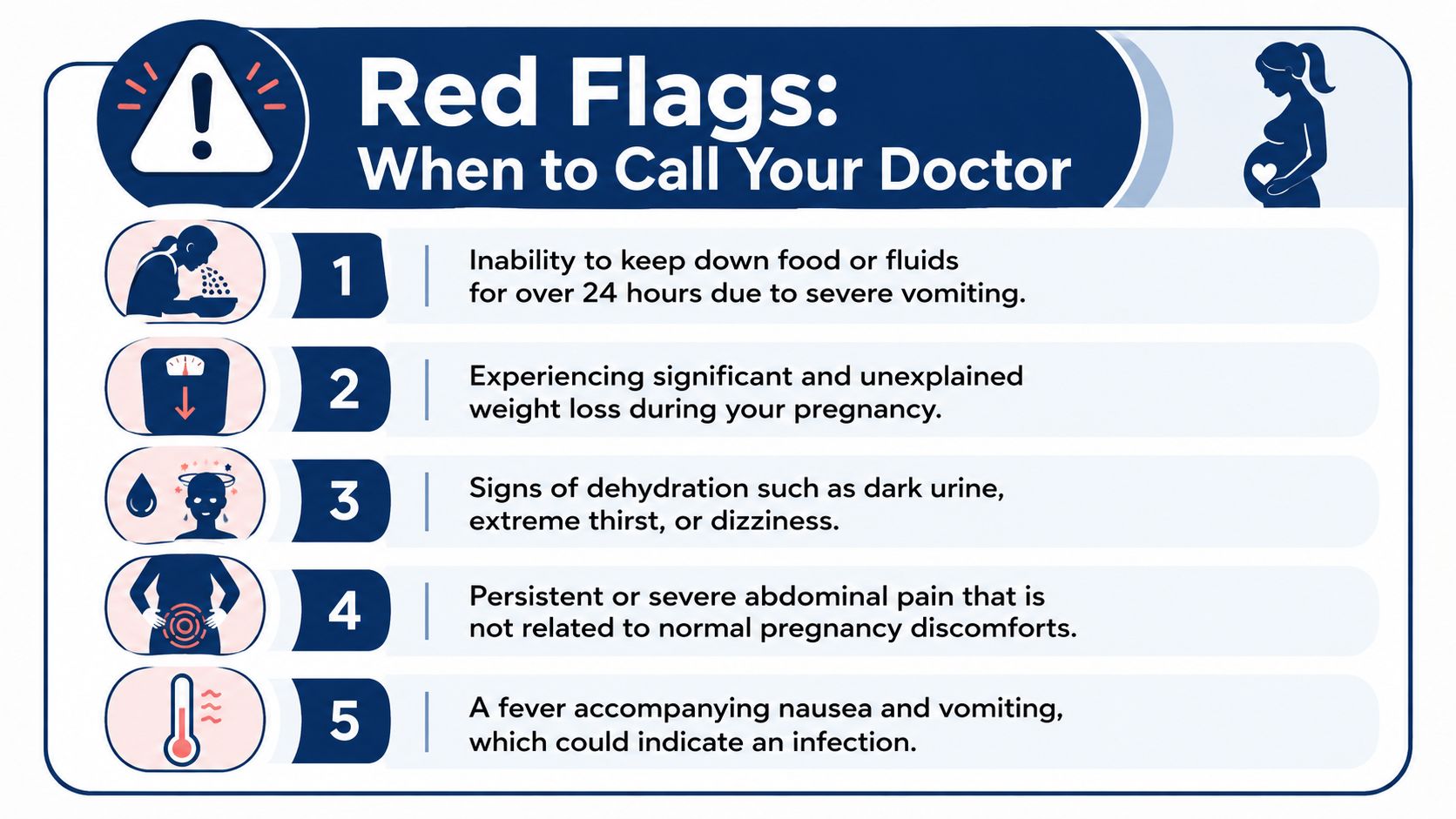
Signs that need prompt attention
Contact your healthcare team if you're dealing with problems such as:
- You can't keep fluids down
- You're showing signs of dehydration
- You're losing weight or becoming noticeably weaker
- You have severe abdominal pain or fever
- Your nausea is affecting your ability to function or care for yourself
In studies of pregnant women with hyperemesis gravidarum, P6 wristbands used for at least 30 minutes per day significantly reduced nausea severity when assessed at 8, 16, and 24 hours post-admission, and they also decreased antiemetic use and increased urine ketone clearance, as described in this peer-reviewed report on P6 wristbands in pregnancy-related severe nausea. That's encouraging, but it also highlights an important truth. Even when acupressure helps, severe cases still belong in medical care.
Medication can be part of integrative care
Some parents feel disappointed if they need medication. I'd encourage a more balanced view. Integrative care doesn't mean avoiding every conventional treatment. It means using the right level of support for the problem in front of you.
If your clinician recommends anti-nausea medication, that discussion is part of care, not a failure of self-help. The same applies to mental health. Ongoing nausea can contribute to anxiety, low mood, irritability, hopelessness, or difficulty functioning. When that happens, medical support matters.
Psychotropic medications may also come up in perinatal mental health care. Different groups of medications support brain function in different ways. For example, some are used to help regulate mood, some reduce anxiety, and some can improve the ability to rest, think more clearly, and participate in daily life again. Those decisions are individualized and should always be reviewed with a qualified healthcare professional, especially during pregnancy or postpartum.
If symptoms are pushing you into survival mode, bring your full picture to your clinician. Physical symptoms, sleep, mood, food intake, hydration, and daily functioning all belong in the same conversation.
Building Your Daily Anti-Nausea Routine
Relief usually comes from rhythm, not from one perfect remedy. A practical anti-nausea routine is often simple enough to repeat even on hard days.
Start with the moments that tend to trigger symptoms. Keep a small snack by the bed. Use P6 acupressure before getting up if mornings are rough. Eat a modest breakfast, then stay ahead of hunger instead of waiting until you feel depleted. Choose movement that settles you rather than drains you. Protect your attention from unnecessary stress where you can.
A broader evidence review supports using acupressure as a meaningful option. A 2022 systematic review and meta-analysis found that acupressure was associated with strong improvement in nausea outcomes, reporting an odds ratio of 4.81 with a 95% confidence interval of 3.47 to 6.68, indicating a substantially higher likelihood of symptom improvement across included trials, as summarized in this review of acupressure for nausea outcomes.
A steady daily plan might look like this:
Morning
Bedside snack, slow rising, P6 pressure, gentle hydrationMidday
Small meals, plain protein if tolerated, brief walk, rest before symptoms buildAfternoon and evening
Simple dinner, reduced food odors, calming breathwork, early sleep routine
Keep the standard disclosure in mind. This information is educational only and isn't intended to diagnose or treat any medical condition. Always consult a qualified healthcare professional before starting, stopping, or combining supplements, medications, or new treatment approaches during pregnancy.
If your family is looking for compassionate, evidence-based mental health support for children and teens, Children Psych offers psychiatric care, therapy support, and telehealth services in California. Their approach is especially helpful for parents who want thoughtful guidance that considers lifestyle, emotional well-being, and clinical treatment together.