


A parent often notices abandonment fears through what looks, at first, like an outsized reaction. A middle schooler falls apart because a friend didn't text back. A teen becomes panicked after a dating partner asks for one quiet evening. A younger child clings at drop-off far beyond what the family expected. Parents usually ask the same question. “Is this normal sensitivity, or is something deeper going on?”
When people talk about abandonment issues in relationships, they usually mean a deep fear of being left, emotionally dropped, replaced, or no longer cared for. In children and teens, that fear doesn't always sound like “I'm afraid you'll leave me.” It often shows up as anger, shutdown, jealousy, nonstop reassurance-seeking, controlling behavior, or intense distress after small changes in plans.
Parents can feel torn here. You want to comfort your child, but you also don't want to reinforce a pattern that keeps growing. You may also be noticing that emotional triggers are worse when your child is hungry, sleep-deprived, under-exercised, scrolling late into the night, or already struggling with anxiety or ADHD. That matters. Emotional regulation rarely sits in only one lane.
A useful approach is integrative care. That means looking at attachment, daily routines, food, movement, family communication, school stress, possible neurodivergence, and, when needed, therapy or medication support. Abandonment fear is rarely helped by reassurance alone. Kids need skills, structure, and a home environment that helps the nervous system settle.
Practical rule: If a child's reaction is bigger than the event, look beneath the event.
Introduction A Guide for Concerned Parents
Parents usually arrive at this topic after a confusing moment. A canceled sleepover leads to sobbing and “nobody likes me.” A delayed pickup sparks panic and rage. A teen whose partner took longer than usual to reply starts saying the relationship is over. These reactions can seem dramatic from the outside, but inside the child, the experience is often one of real alarm.
That's why it helps to think in plain language. Abandonment issues are not just fear of a breakup or fear of being alone. They're a persistent expectation that closeness may disappear, that love may be unreliable, or that connection can be withdrawn without warning. For some children, that expectation grows out of obvious loss. For others, it forms through inconsistency, emotional unavailability, repeated conflict, or a nervous system that reacts strongly to perceived rejection.
Parents often blame themselves too quickly. Most families are doing the best they can under stress. The task is not to find one person to blame. The task is to understand the pattern and respond effectively.
What concerned parents can look for first
- Notice the trigger pattern: Does distress follow separations, delayed texts, schedule changes, conflict, or a request for space?
- Track the body signs: Does your child look flooded, shaky, restless, tearful, or unable to think clearly?
- Watch the recovery process: Does reassurance help briefly, then wear off quickly?
- Look at the whole child: Sleep, meals, exercise, social stress, school pressure, and screen habits all influence emotional reactivity.
A child who fears abandonment isn't trying to be difficult. The child is trying to feel safe. Once parents understand that, responses become calmer, firmer, and more helpful.
What Are Abandonment Issues and How Do They Form
A simple way to understand this is through the idea of a secure base. Children explore the world more confidently when they trust that a caregiver is emotionally available, predictable, and responsive. That doesn't require perfect parenting. It requires enough consistency that the child's brain learns, “When I'm distressed, someone helps me come back to steady.”
When that pattern is shaky, children may develop insecure attachment. Then the brain starts scanning for signs that closeness is at risk. In clinical terms, abandonment issues are strongly associated with insecure attachment and can create a self-reinforcing loop in which perceived distance is read as rejection, triggering hypervigilance, reassurance-seeking, or withdrawal, which then strains the relationship further, as described by Charlie Health's overview of abandonment issues in adults.
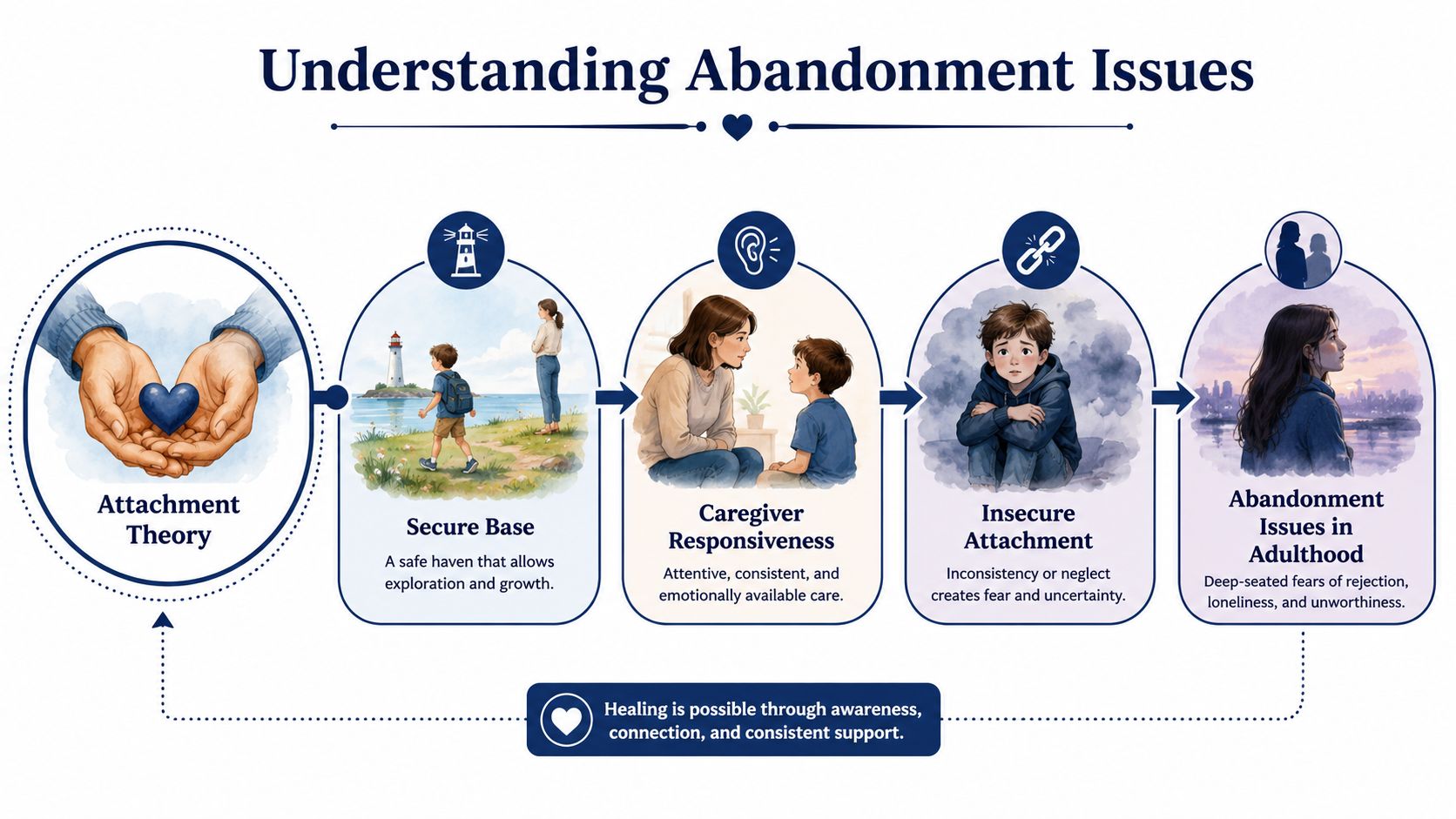
The loop parents often miss
A child senses distance. The child becomes alarmed. Then one of several things happens:
- Clinging: repeated checking, following, needing constant closeness
- Protesting: anger, accusations, “you don't care about me”
- Testing: pushing people away to see if they'll come back
- Withdrawing: acting cold first, so rejection hurts less
Each of these behaviors can make the relationship feel more tense. Then the child sees the tension as proof that abandonment is coming. That's how the loop keeps going.
Why small events can feel big
To a regulated child, a late reply may be mildly annoying. To a child with attachment-based abandonment fears, the same event can register as danger. The emotional brain treats uncertainty as threat.
That's one reason families sometimes benefit from learning more about attachment patterns in broader behavioral contexts. For parents who want a wider look at how attachment can shape coping and self-focus under stress, Zoe Behavioral Health on addiction offers a useful perspective. If your child tends to pull away rather than cling, this related discussion of avoidant attachment disorder may also help put the pattern into words.
Kids usually don't choose these reactions. Their nervous systems learn them.
Recognizing the Signs in Children and Adolescents
A parent may describe a child as “too sensitive,” “always worried someone is mad,” or “fine one minute and devastated the next.” Those descriptions often point to the same underlying question. Is the child reacting to a real relationship problem, or is an internal alarm system turning a neutral event into a threat?
Abandonment fears can be mistaken for simple relationship problems when they're really an attachment-pattern issue. They can show up as heightened sensitivity to neutral events, difficulty self-soothing, and preemptive rejection, as explained in Empathi's discussion of abandonment issues.
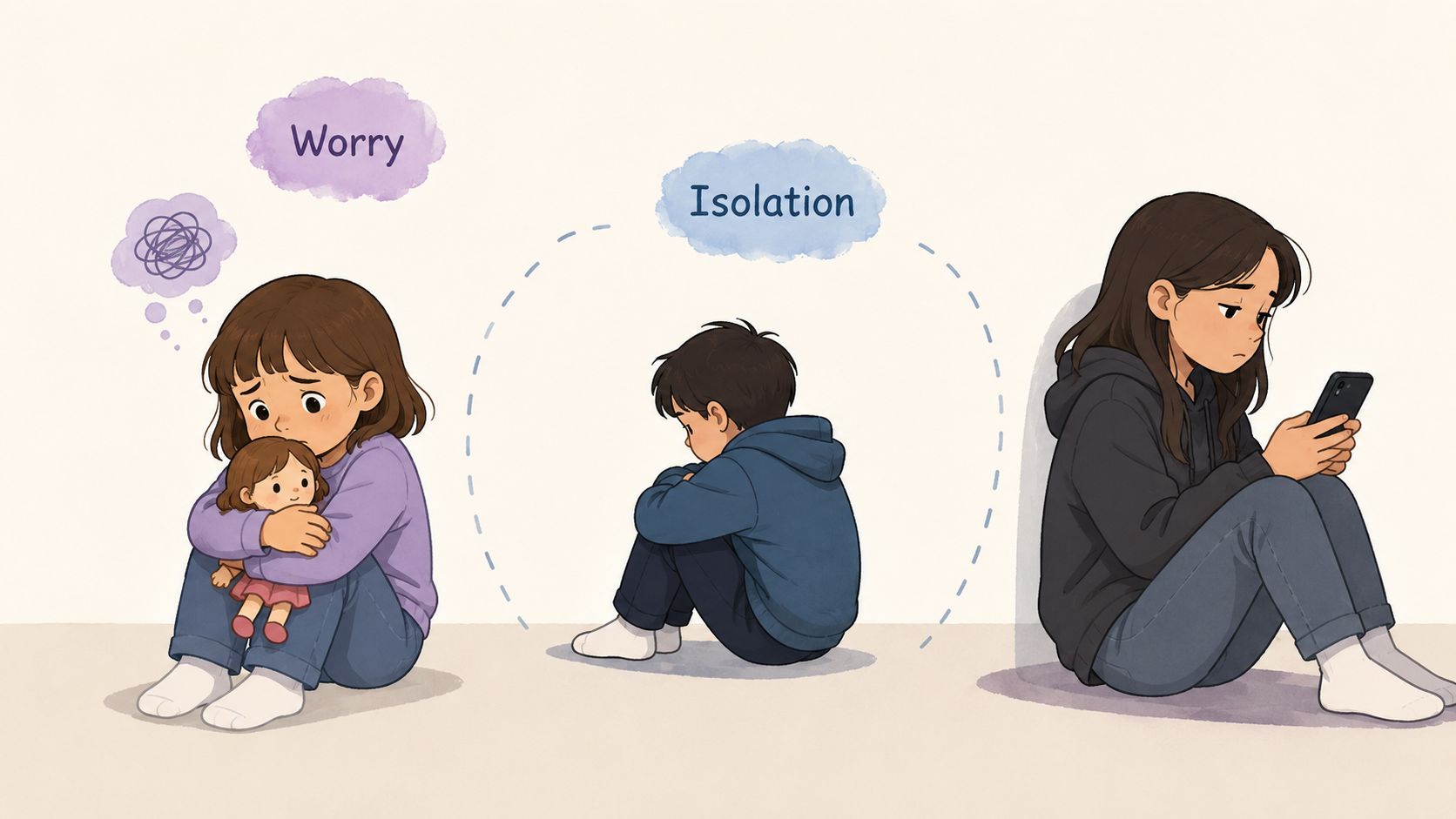
What it can look like in younger children
In younger kids, the signs are often concrete and behavioral.
- Drop-off distress: school separation remains intense or returns suddenly after a stressor
- Difficulty settling: the child can't calm after a minor disappointment without prolonged adult help
- Repeated checking: “Will you be here?” “What time are you coming back?” over and over
- Strong reactions to plans changing: a schedule shift leads to panic, not just frustration
- Possessiveness: jealousy around siblings, friends, or even a parent's work demands
A child may also become controlling around routines. That isn't always oppositionality. Sometimes it's an attempt to reduce uncertainty.
What it can look like in adolescents
Teens often show abandonment issues in relationships more socially and romantically.
- Texting intensity: repeated messages after a delay, then anger or despair
- Fast escalation in dating relationships: deep attachment forms quickly, and normal space feels threatening
- Jealousy or comparison: every social cue is filtered through “I'm being replaced”
- Shutdown after conflict: one disagreement leads to “I'm done,” even when the relationship is intact
- Harsh self-talk: “I ruin everything,” “No one stays,” “I'm too much”
Some teens swing between neediness and distance. They ask for reassurance, feel better briefly, then become upset again. That pattern suggests the problem isn't merely lack of comfort. The underlying alarm keeps restarting.
How to tell internal fear from an external problem
Parents often need a simple sorting question. Ask this: Is the reaction proportional to the event and the relationship context?
A real external problem may involve ongoing inconsistency, coldness, exclusion, or neglect. An internal abandonment trigger often appears when the event is relatively neutral, the relationship is mostly intact, and the child still experiences extreme threat.
If the facts look mild but the fear feels enormous, think attachment and regulation, not just behavior.
The Deeper Roots and Overlapping Conditions
Families often assume abandonment fears come only from major loss, divorce, or obvious trauma. Sometimes they do. But many children develop these fears in quieter ways. A caregiver may be loving but chronically overwhelmed. Home may feel unpredictable because of illness, conflict, work strain, or frequent emotional unavailability. A child can experience that as “I'm not sure people will be there when I need them.”
Another layer involves shame and guilt. Research on childhood rejection and abandonment links those experiences to self-conscious emotions that matter later in relationships. One study found a large effect size of Cohen's d = 1.186 for the association between emotional abuse and guilt in this context, as reported in this PMC article on parental rejection, abandonment, and self-conscious emotions. Clinically, this matters because children who carry shame often interpret ordinary feedback as proof that they are unwanted.
Shame changes the meaning of social events
A teen who already feels “not enough” may hear a friend's delayed response as confirmation of worthlessness. A child who feels chronically guilty may over-apologize, become people-pleasing, or cling harder after conflict.
This is why reassurance alone often doesn't work for long. Reassurance addresses the immediate fear signal. It does not automatically change the underlying self-story.
Neurodivergence can intensify the picture
This is one of the most overlooked issues in practice. Some children with ADHD or overlapping emotion regulation problems look as if they have pure abandonment anxiety, but the picture is more layered. Impulsivity, rapid emotional shifts, and strong rejection sensitivity can magnify relationship fears.
For parents trying to understand these styles more clearly, this overview to learn about attachment patterns can be a helpful companion read. It's especially useful when your child shows both closeness-seeking and avoidance depending on stress.
A neurodivergent child may not just fear rejection more. The child may react faster, recover more slowly, and struggle to use coping skills in the moment. That's why families sometimes need a broader assessment rather than a narrow focus on “behavior problems.”
Your Integrative Plan to Build Security at Home
Home support works best when it combines emotional, behavioral, and physical regulation. If a child's nervous system is overloaded, no script or lecture will land well. An integrative plan gives the brain more chances to stay steady.
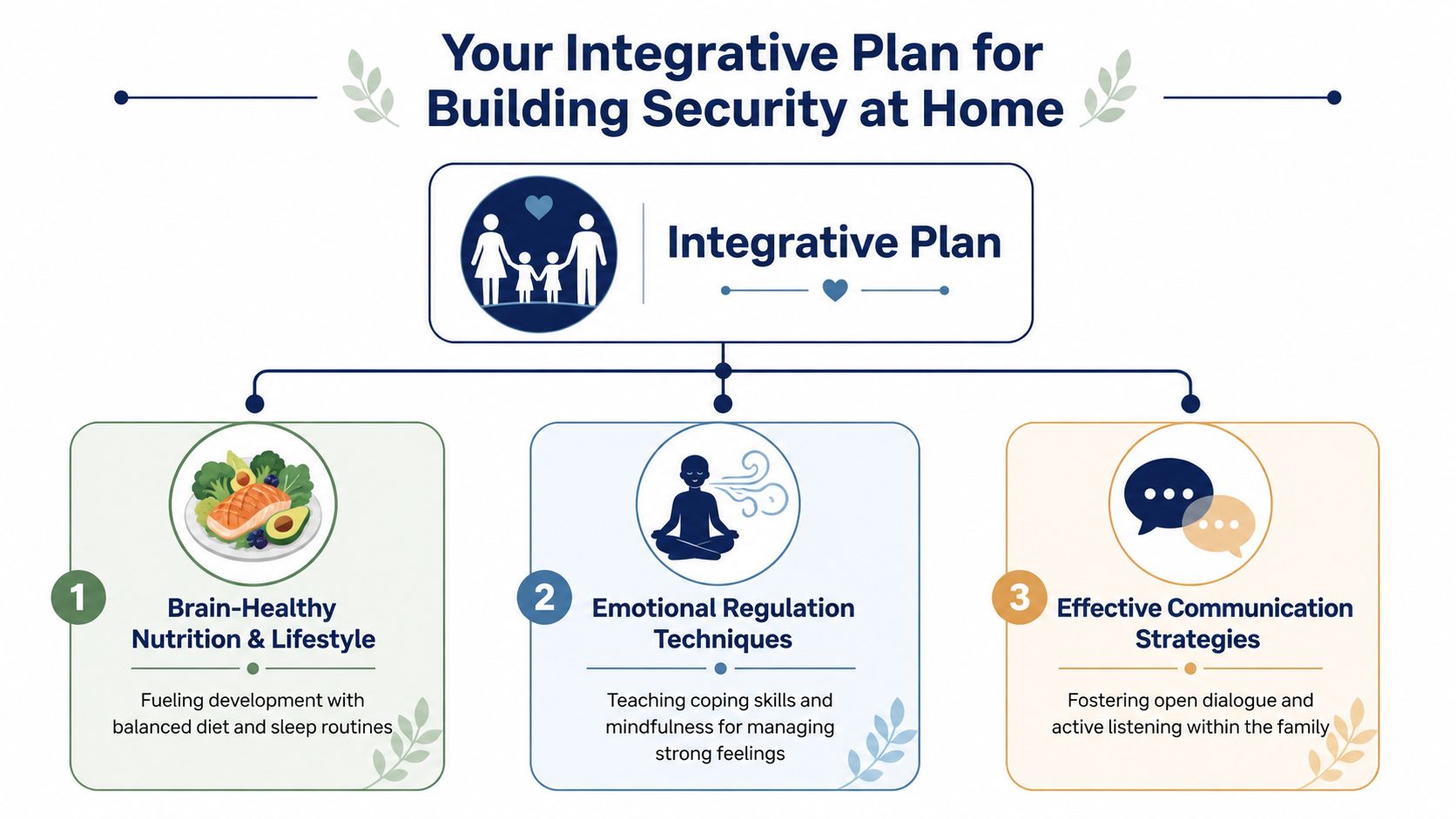
Start with predictability
Children with abandonment fears usually do better when the day feels legible.
- Use visual routines: simple morning and evening checklists reduce uncertainty
- Preview changes early: let your child know about schedule shifts before the last minute
- Create reunion rituals: a predictable after-school snack, walk, or check-in can reduce separation stress
- Keep your word when possible: consistency matters more than grand gestures
Families going through transitions may also benefit from practical support around separation and family change. This guide on helping children cope with divorce can be useful when relational security has been disrupted at home.
Build regulation into the body
Exercise is one of the most practical brain-health tools parents can use. It helps children discharge stress, improve mood regulation, and sleep more reliably. You don't need a formal sports plan for this to help.
Consider habits such as:
- Daily movement: walks, biking, dancing, playground time, martial arts, or team sports
- Morning light exposure: getting outside early can support a steadier daily rhythm
- Screen boundaries: late-night scrolling often worsens comparison, rejection sensitivity, and sleep
- Regular meals: long gaps between eating can amplify irritability and emotional volatility
Some unhealthy habits can subtly worsen abandonment-related meltdowns. Skipping breakfast, excess caffeine in teens, highly irregular sleep, and hours of sedentary screen time often leave kids more reactive and less resilient.
Support the brain with food and sensible supplement conversations
Nutrition won't solve attachment wounds, but it can support steadier brain function. Aim for meals that include protein, fiber, healthy fats, and consistent timing. Affordable options can include eggs, oats, beans, lentils, yogurt, peanut butter, canned salmon or sardines, frozen berries, brown rice, pumpkin seeds, and walnuts.
When parents ask about nutritional deficiencies, the most responsible answer is this: deficiencies can contribute to mood, attention, and energy problems, but they should be assessed with a clinician rather than guessed. If you're considering supplements, discuss them with your child's healthcare professional first, especially if your child takes medications.
| Nutrient/Habit | How It Helps | Affordable Sources / Actionable Tips |
|---|---|---|
| Omega-3 fats | Support brain and nervous system function | Try low-cost canned salmon or sardines. If considering a fish oil supplement, look for third-party tested products and ask a clinician which type fits your child's needs. |
| Protein at breakfast | Can support steadier energy and mood through the morning | Eggs, Greek yogurt, cottage cheese, tofu, or nut butter with toast are budget-friendly options. |
| Regular hydration | Helps kids avoid feeling worse when tired or headachy | Keep a water bottle visible and pair drinking water with routine transitions. |
| Magnesium-rich foods | Support overall body regulation as part of a balanced diet | Beans, seeds, nuts, leafy greens, and whole grains are practical food-first choices. |
| Consistent meal timing | Reduces “crash” moments that can worsen irritability | Use simple repeatable snacks like apple with peanut butter, cheese and crackers, or hummus with carrots. |
| Daily movement | Improves stress regulation and sleep | Free options work well. Walks, playgrounds, family bike rides, and home dance breaks all count. |
For families who prefer a food-first plan, that's often a smart starting point. If you do discuss supplements, ask about quality testing, ingredient simplicity, and whether the product is age-appropriate. Omega-3s are commonly discussed because of their role in brain health, but “more” isn't always better, and children vary in what they tolerate.
A brief visual overview can help pull these pieces together.
Strengthen connection without feeding the cycle
There's a significant link between abandonment issues and neurodivergence, especially ADHD-related rejection sensitivity, and parents may misread these reactions as simple behavior problems rather than a nervous system pattern, as discussed by Newport Healthcare's article on abandonment issues.
At home, that means two things can be true. Your child needs empathy, and your child also needs structure.
Try this pattern:
- Name the feeling first: “This felt scary to you.”
- State the reality clearly: “A delayed text doesn't always mean rejection.”
- Shift to a skill: breathing, water, a walk, journaling, music, or a pause before replying
- Return to the problem later: once the body has settled
Reassure less by repeating the same promise, and more by teaching the same recovery steps.
Professional Support and Clinical Treatments
When abandonment fears start interfering with school, friendships, dating, sleep, or family life, it's time to consider professional help. Home strategies are important, but they may not be enough when the child has intense anxiety, repeated meltdowns, depression, self-harm risk, or overlapping ADHD and emotional dysregulation.
A longitudinal study found that childhood fears of abandonment predicted higher anxiety in romantic relationships six years later, and that anxiety was then associated with higher depressive symptoms, according to this PMC study on bereaved youth and later relationship anxiety. That finding is one reason early support matters. These patterns can echo forward if no one interrupts them.
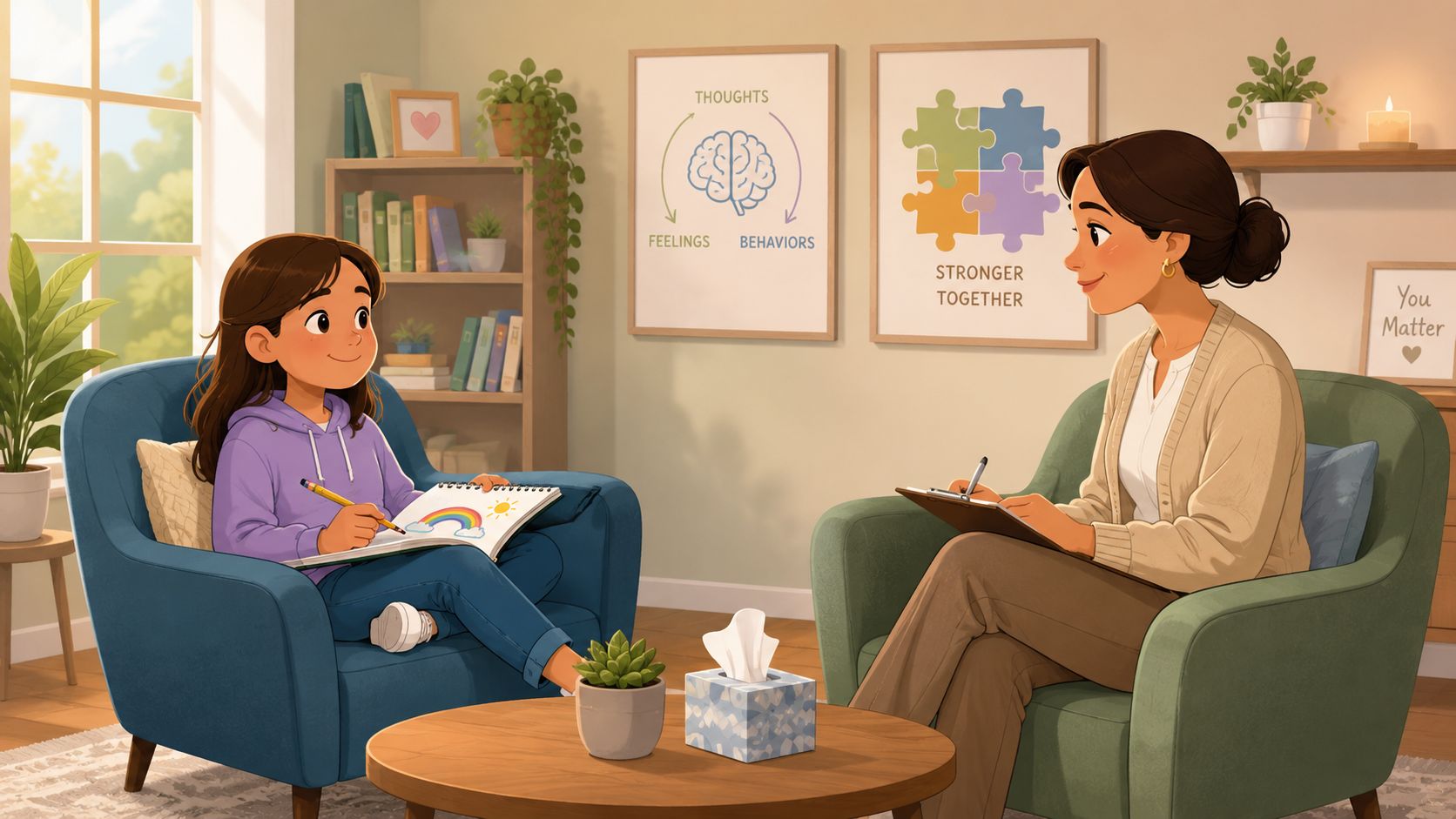
What therapy often targets
Different therapies help different parts of the pattern.
- Cognitive Behavioral Therapy: helps children identify anxious interpretations and build more accurate thinking
- Family therapy: improves communication, repair after conflict, and caregiver response patterns
- Skills-based therapy: teaches emotional regulation, boundaries, and distress tolerance
- Attachment-focused work: helps children experience safer, more predictable emotional connection
Parents also sometimes need guidance around whether the main issue is the child's internal alarm, a strained relationship dynamic, or both. In older teens and adults, specialized resources such as relationship counselling in Birmingham can illustrate how relational work becomes part of treatment when patterns are entrenched.
Where medication can fit
Medication is not a cure for abandonment issues in relationships. But psychotropic medications can be important when underlying conditions are fueling the emotional intensity.
For example:
- SSRIs and related antidepressant medications: may help reduce anxiety and depressive symptoms, making the child less flooded by everyday relational stress
- Stimulant medications: may improve attention, impulse control, and emotional reactivity in children with ADHD, which can lower explosive responses to perceived rejection
- Non-stimulant ADHD medications: may help some children who need support with regulation and attention
- Other medication strategies: may be considered by a prescriber when mood instability, severe anxiety, or sleep disruption is part of the picture
The practical goal is brain stability. When symptoms are less overwhelming, children often engage better in therapy, think more clearly, and use coping skills more effectively. Medication decisions are always individualized and should be discussed with a qualified clinician, especially when supplements are also being considered.
When to seek an evaluation
Consider an evaluation when your child shows any of the following:
- Persistent relationship panic: distress keeps recurring across friendships, family relationships, or dating
- Functional decline: school performance, attendance, sleep, or social participation worsens
- Safety concerns: self-harm talk, hopelessness, severe shutdown, or aggressive outbursts emerge
- Complex presentation: anxiety, ADHD, depression, trauma history, and family stress seem tangled together
If you're unsure how to start, this guide on finding the right therapist for a child can make the search more manageable.
Moving Forward With Hope and Resilience
Children and teens can heal from abandonment-based patterns. The path usually isn't quick, and it rarely comes from reassurance alone. What helps is a combination of steadier relationships, better regulation skills, healthier daily rhythms, movement, brain-supportive nutrition, thoughtful therapy, and, for some children, medication for underlying anxiety, depression, or ADHD.
Parents don't need to fix every feeling. They need to create conditions in which the child feels safer, more predictable, and more capable. That means responding with warmth, setting limits without shame, noticing unhealthy habits that intensify symptoms, and getting professional help when the pattern is too strong to manage at home.
Keep the long view. A child who reacts intensely today is not doomed to struggle forever in future relationships. With support, kids can learn to tolerate uncertainty, trust connection more, and build healthier ways of asking for closeness.
This information is for educational purposes only and is not intended to diagnose, treat, or replace professional medical advice, diagnosis, or treatment. Consult a qualified healthcare professional before making decisions about treatment, medications, or supplements.
If you're looking for compassionate, evidence-based support for a child or teen struggling with anxiety, ADHD, mood changes, or relationship-related distress, Children Psych offers child and adolescent psychiatry services designed for families who want both clinical expertise and a holistic perspective. Their team provides evaluations, therapy, medication management, and telehealth care across California, with an approach that respects the child, supports the parent, and looks at the whole picture.